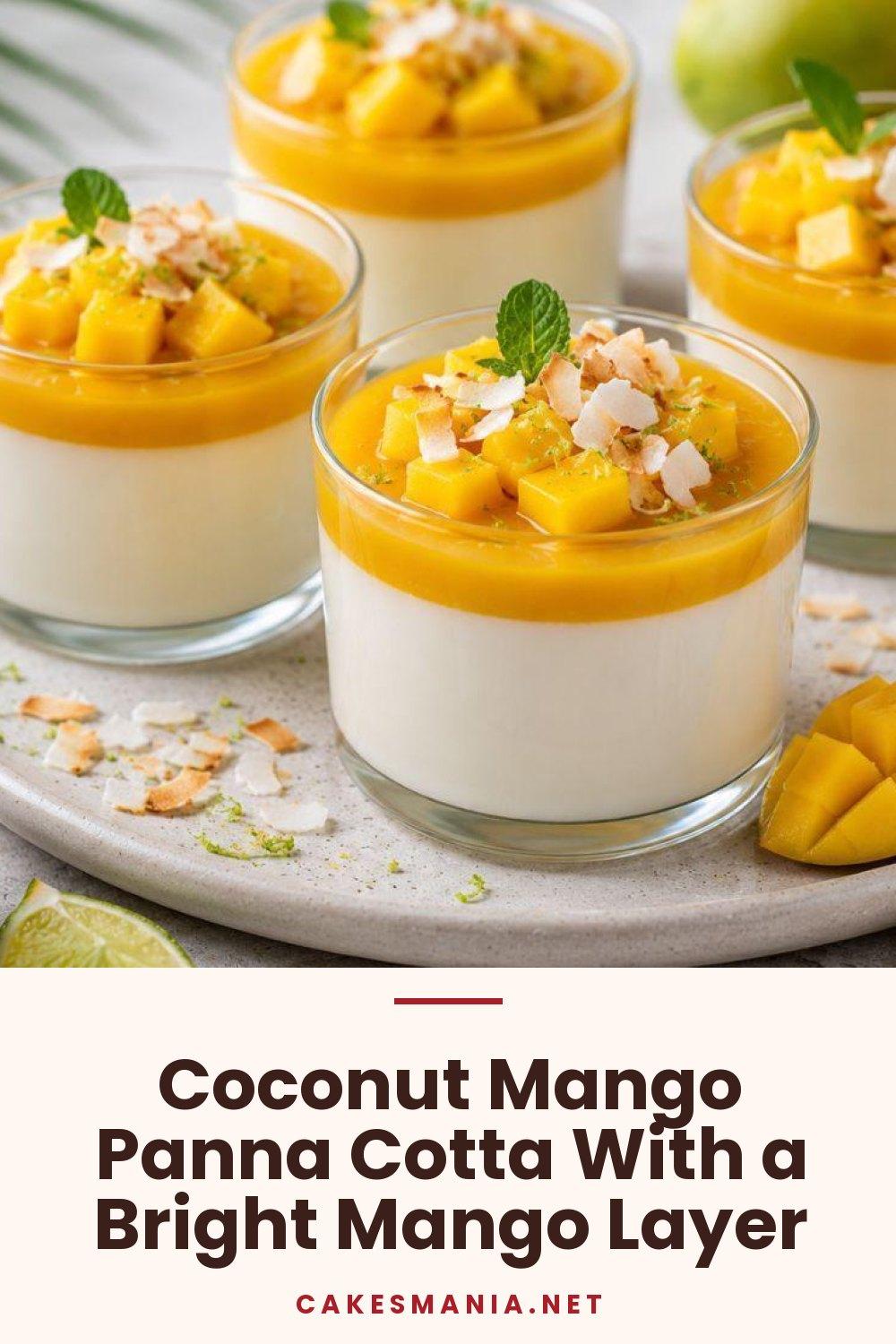
Coconut Mango Panna Cotta With a Bright Mango Layer


Coconut mango panna cotta is a light, elegant dessert made with silky coconut cream and a bright mango topping. It has a smooth texture, a delicate tropical flavour and an attractive layered appearance, yet it requires very little active preparation.
Unlike traditional panna cotta, which is usually made entirely with dairy cream, this version combines coconut milk with double cream. The coconut adds flavour without becoming overpowering, while the cream gives the dessert its characteristic richness.
The mango layer provides freshness and natural sweetness. For the best result, use ripe mangoes that feel slightly soft when pressed and have a fragrant aroma. Frozen mango can also be used after thawing.
These panna cotta cups can be prepared one day in advance, making them ideal for dinner parties, summer celebrations or a simple dessert after a family meal.
Coconut Mango Panna Cotta
Preparation time
25 minutes
Chilling time
At least 5 hours
Servings
6 individual desserts
Ingredients
For the coconut panna cotta
- 400 ml full-fat coconut milk
- 200 ml double cream or heavy cream
- 70 g granulated sugar
- 1 teaspoon vanilla extract
- A small pinch of salt
- 7 g powdered gelatine
- 3 tablespoons cold water
For the mango topping
- 300 g ripe mango, peeled and chopped
- 2 tablespoons granulated sugar
- 1 tablespoon fresh lime juice
- 2 tablespoons water
- ½ teaspoon powdered gelatine, optional
For decoration
- Fresh mango cubes
- Toasted coconut flakes
- Lime zest
- Fresh mint leaves, optional
Instructions
1. Prepare the gelatine
Place three tablespoons of cold water in a small bowl.
Sprinkle the powdered gelatine evenly over the surface. Do not stir immediately. Leave it to stand for approximately five minutes, until the gelatine absorbs the water and becomes soft.
This process is known as blooming and helps the gelatine dissolve smoothly into the panna cotta mixture.
2. Heat the coconut mixture
Pour the coconut milk, double cream and sugar into a medium saucepan.
Add the vanilla extract and a small pinch of salt. Heat the mixture over medium-low heat, stirring occasionally, until the sugar has completely dissolved.
Do not allow the mixture to boil. It should be hot and steaming, but not bubbling vigorously.
3. Add the gelatine
Remove the saucepan from the heat.
Add the bloomed gelatine and whisk gently until it has completely dissolved. Make sure no gelatine granules remain at the bottom of the saucepan.
Allow the mixture to cool for approximately ten minutes.
4. Fill the serving glasses
Divide the coconut mixture evenly between six small glasses or dessert cups.
For a neat presentation, pour the mixture through a fine sieve. This removes any undissolved particles and creates an especially smooth texture.
Place the glasses in the refrigerator and chill for at least four hours, or until the panna cotta is firm but still has a gentle wobble.
5. Prepare the mango topping
Place the chopped mango, sugar, lime juice and water in a small saucepan.
Cook over medium heat for four to five minutes, stirring occasionally, until the mango softens and the sugar dissolves.
Transfer the mixture to a blender and process until completely smooth.
Taste the purée and adjust the sweetness when necessary. The mango topping should be fresh and slightly tangy to balance the creamy coconut layer.
6. Add gelatine to the mango layer
This step is optional. Without gelatine, the mango will remain similar to a thick fruit sauce. With gelatine, it will form a soft, defined layer.
When using gelatine, sprinkle half a teaspoon over one tablespoon of cold water and allow it to bloom for five minutes.
Stir it into the warm mango purée until completely dissolved.
Leave the purée to cool to room temperature. Do not pour hot mango over the panna cotta, as it may soften the coconut layer.
7. Add the mango topping
Once the coconut panna cotta is completely set, spoon the cooled mango purée over each portion.
Spread it gently into an even layer.
Return the glasses to the refrigerator for at least one additional hour. When using gelatine in the mango layer, allow two hours for it to set properly.
8. Decorate and serve
Shortly before serving, decorate each glass with small mango cubes, toasted coconut flakes and a little finely grated lime zest.
Add a mint leaf for a fresh finishing touch, when desired.
Serve the panna cotta chilled.
Helpful Tips
Use full-fat coconut milk
Light coconut milk contains more water and may produce a less creamy panna cotta. Shake or stir the coconut milk before measuring it, as the thicker coconut cream often separates inside the tin.
Do not boil the mixture
Boiling can affect the setting strength of the gelatine and may cause the coconut milk to separate. Heat the mixture only until it is steaming and the sugar has dissolved.
Adjust the gelatine carefully
Too much gelatine will create a firm, rubbery texture. Panna cotta should hold its shape while remaining soft and creamy.
Choose ripe mangoes
Ripe mangoes create a naturally sweet, smooth topping. When the fruit is not very sweet, add a little extra sugar or honey.
Try different fruits
The mango topping can be replaced with:
- Passion fruit
- Pineapple
- Raspberry
- Strawberry
- Peach
- Mixed tropical fruit
Acidic fruits create a pleasant contrast with the rich coconut base.
Make the dessert dairy-free
Replace the double cream with additional coconut milk or a plant-based whipping cream. Check that the alternative cream is suitable for heating.
Prepare it in advance
The panna cotta can be prepared up to two days before serving. Keep the glasses covered in the refrigerator and add the decorative toppings shortly before serving.
Storage
Cover the panna cotta cups and keep them refrigerated for up to three days.
Fresh mango cubes and toasted coconut are best added just before serving, as the fruit may release liquid and the coconut can lose its crisp texture.
Freezing is not recommended because the creamy layer may become grainy after thawing.
Conclusion
Coconut mango panna cotta is a simple dessert with a refined appearance and a refreshing tropical flavour. The creamy coconut layer contrasts beautifully with the bright mango topping, while lime adds enough acidity to keep the dessert balanced.
Because the individual cups can be assembled well in advance, this recipe is particularly useful when entertaining. Serve it after a rich meal, at a summer celebration or whenever you want a dessert that feels special without requiring complicated preparation.